
In front of the Three Queens statue stands a tribute to the courageous women who led the 1878 labor revolt on St. Croix. Their fight for better wages and fair treatment sparked one of the most important uprisings in Virgin Islands history. This stop honors their leadership, their sacrifice, and the movement that forever changed the Danish West Indies.
There is a plaque here commemorating the women who led the labor revolt in St. Croix in 1878. “Set in bronze, Queen Mary, Queen Agnes, and Queen Josiah — who on Oct. 1, 1878, led laborers in setting fire to half of Frederiksted on St. Croix in a successful demand for better wages and working conditions.”
The sculpture, created by artist Richard Hallier, depicts the women standing with their arms raised, holding symbolic items such as a machete, a jug of oil, and flambeaux as water cascades over their backs from a fountain shaped from blue bit stone. This work was commissioned by the St. Thomas Historical Trust in partnership with Circa 1675 and Virgin Islands Inns, honoring the women’s unbreakable strength and determination.
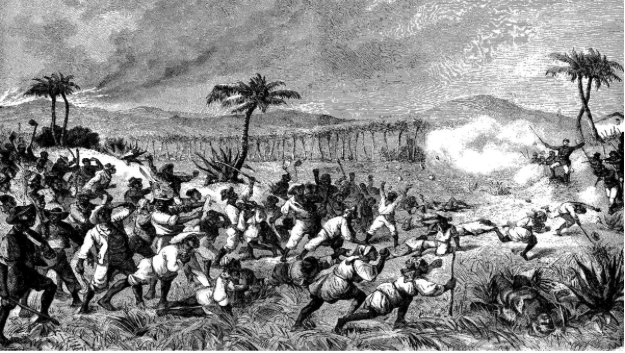
The St. Croix Labor Riot of 1878, also known as the Fireburn, was a pivotal event of resistance and struggle in the Danish West Indies. It revealed the lasting impact of slavery and the exploitation of formerly enslaved laborers. Even after emancipation in 1848, many African-descended workers were forced into contracts that kept them living and working under harsh and unjust conditions.
On October 1, 1878, known as Contract Day, years of frustration and injustice erupted into rebellion. Mary Thomas became the first of three women to rise as leaders of the uprising. Alongside her, Axelene “Agnes” Salomon and Mathilda McBean played influential roles and were later known collectively as The Three Queens. Susana Abramsen was also recognized for her contributions to the movement.
This uprising remains a powerful symbol of courage and resistance against systemic oppression. The legacy of the Fireburn continues to be honored today throughout the U.S. Virgin Islands.